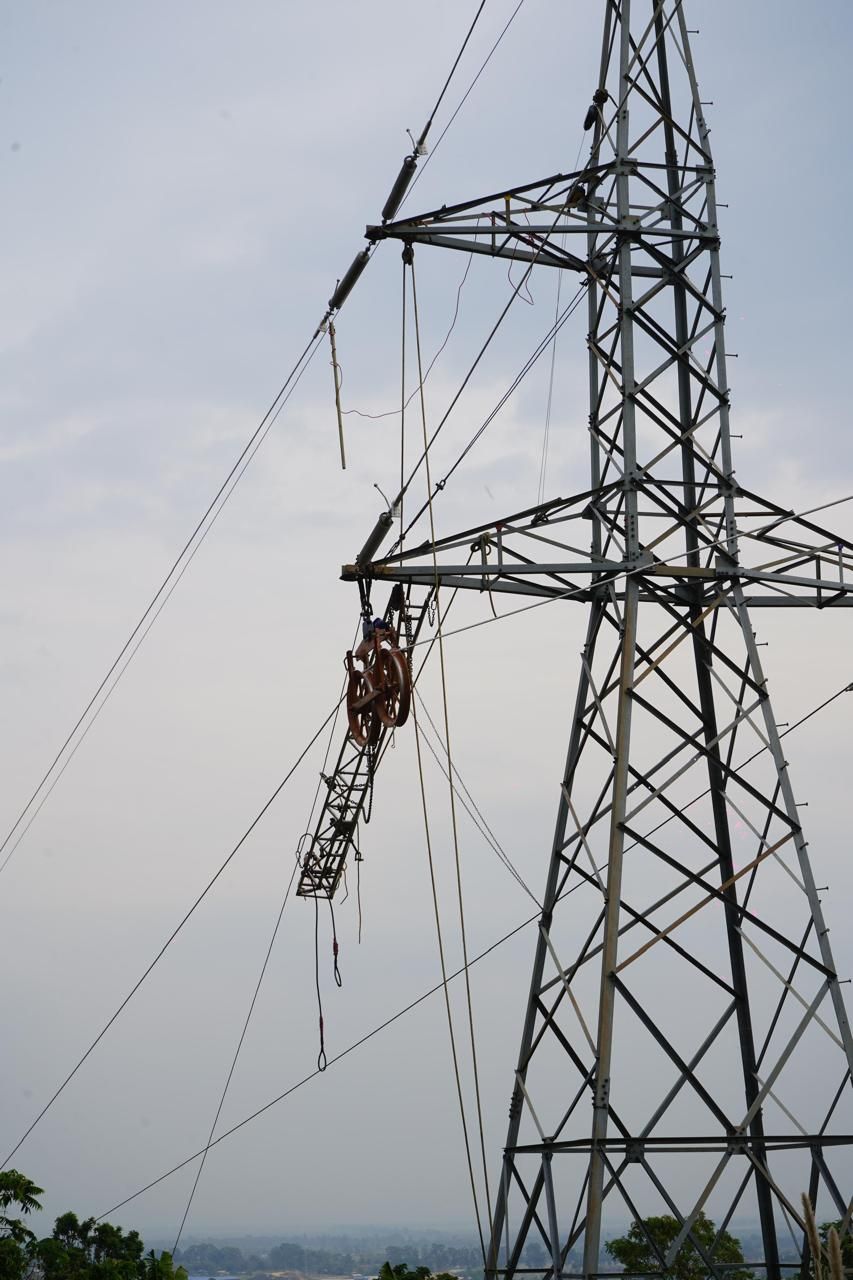
India's demand for electricity keeps rising, and renewable generation is often built far from where power is used. Building new transmission corridors is slow and expensive, and right-of-way is increasingly hard to secure. Reconductoring, which means replacing the conductor on an existing line with a High Temperature Low Sag (HTLS) conductor, is one of the fastest ways to add capacity.
Why temperature and sag matter
The current a conductor can carry is limited by how hot it may run and how far it sags as it heats up. Conventional conductors lengthen as they warm, so the line droops closer to the ground. HTLS conductors are built to run much hotter while keeping sag under control, so the same towers can carry far more power.
The main HTLS families
- TAL (thermal-resistant alloy): operates up to 150°C, a straightforward route to uprating existing networks.
- ACCC® (composite core): up to 180°C, with the lowest sag among HTLS technologies and a lightweight carbon and glass fibre core.
- ACSS (steel supported): up to 200°C, with fully annealed aluminium strands and a steel core that carries the load.
- STACIR (invar reinforced): up to 210°C and up to 100 to 150% more current than equivalent ACSR, thanks to a low-expansion invar core.
- GAP type (GTACSR / GZTACSR): up to 210°C and up to twice the current of equivalent ACSR, using a grease-filled gap so the core and outer layers expand independently.
Choosing the right conductor
The best choice depends on the target load, span lengths, tower strength, climate and the balance between capital and operating cost. Most HTLS options need minimal or no tower reinforcement, which is what makes reconductoring so attractive.
JSK manufactures every major HTLS family at Silvassa and supports reconductoring projects end to end through our turnkey engineering team.
Explore JSK's HTLS conductors or send us your line details for a recommendation.